
Ace investor Rakesh Jhunjhunwala on Thursday said real estate developers are afflicted with very low return on capital as compared to bluechip stocks. Jhunjhunwala, who runs RARE Enterprises and is set to be a major shareholder in an upcoming airliner, said only the affordable housing developers can look at listing because of the volumes which they can deliver. It can be noted that very few developers like Macrotech Developers formerly Lodha, and DLF are listed on the bourses. Jhunjhunwala cited the case of DLF, saying the stock price plummeted to Rs 80 from Rs 1,300 per piece to illustrate the risks associated.

Reliance Retail would be exposed to implementation and execution risks in its expansion plans.

Investment in such companies exposes an investor to severe price volatility in case a promoter is not able to meet payments.

India's jugalbandhi with coal and clean energy is coming unstuck, neither achieving adequate renewable generation nor ensuring sufficient coal-fired power in the quest to become a $5-trillion economy. Six months have elapsed since Prime Minister Narendra Modi announced an ambitious climate agenda for India at COP26 at Glasgow. The net zero emissions target by 2070 is a distant one, but there are nearer-term plans to meet 50 per cent of energy demand with renewables by 2030 by increasing capacity to 450 Gw. A cursory look at the balance sheet of India's climate progress since November reveals ponderous progress towards meeting the renewables target even as the country is scrambling to expand coal-fired generation in the face of a power crisis.

Banks put the airline's trademarks including Kingfisher logo and the once-famous tag-line 'Fly the Good Times' on the block

'The approach today is, instead of giving loans to 100 MSMEs, let us give one loan to a big-ticket corporate.' 'And so many of these big fish deceived the banks and the banks are in the doldrums now with high NPAs.'
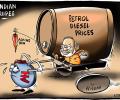
What could be more uncertain than Virat Kohli's agonising wait for a century for over two years? Perhaps it's what you will pay tomorrow morning to fill your vehicle's tank. Pump prices have joined cricket scores as the country's favourite discussion topic. Steep increases invite widespread protests, while moderate additions make the government anti-reformist. The ongoing fuel price conundrum is no different.

This make it the first domestic firm to sell such a long-tenure rupee debt instrument.

Top laggards in the Sensex pack included HDFC, ICICI Bank, TCS, HCL Tech, Kotak Bank, Asian Paints, TechM and HUL, dropping up to 2.67 per cent.

Bold reforms and prudent monetary and fiscal policies by the incoming Narendra Modi government will help the economy to grow at 6.5-7 percent, says a report.

"I don't think the only solution for us is a bank, though it could be a bank. On the other hand, if the financial system continues to grow at 20-25 per cent, there's no reason why in our current construct, we can't comfortably keep growing at that same pace," says Rajiv Lall, CEO and Managing Director, IDFC.
The roads in India is a powerful stimulant to rural employment. It will have a strong multiplier effect on the local economy, says Subir Gokarn.

Assets under management with the mutual fund industry jumped a whopping 41 per cent in fiscal 2021 to Rs 31.43 lakh crore, despite a minor 1 per cent decline in March, says a report. The 1 per cent decline in assets on monthly basis in March was because of net outflows from open-ended debt funds, even though open-ended equity funds for the first time in June 2020 recorded net inflows, according to the industry data collated by Crisil on Friday. Marc saw net outflows of Rs 29,745 crore, taking down the industry's asset base to Rs 31.43 lakh crore, down from the record high of Rs 31.64 lakh crore in February, registering a whopping 41 per cent growth in the fiscal 2021 over the previous fiscal, said Crisil, adding cumulative inflows equalled Rs 2.09 lakh crore.

Given the economic trends, it might make sense to allocate some savings to gold.

Stock market investments are always said to involve risks and people who made big fortunes often made headlines as scamsters, leading to Dalal Street always being looked at with suspicion, but Rakesh Jhunjhunwala was broadly an exception. Jhunjhunwala, a partner at RARE Enterprises, who rose to amass a $5.8 billion fortune and earn the tag of the country's biggest individual investor, leaves behind a relatively cleaner slate, as was seen in the most common description for him -- 'India's own Warren Buffett'. Unlike names like Harshad Mehta and Ketan Parekh, whose rise in fortunes in post-liberalised India was tainted with scam links, the newest 'Big Bull' in the more-regulated market had lesser baggage on this front.

The first to see price hikes will be soaps. In the past six months, domestic palm oil prices have increased by 46 per cent. Palm oil is a key input going into soaps.
The economy is expected to grow by 6.75-7 per cent during 2005-06 and inflation is likely to hover around 5-5.5 per cent, rating agency Crisil said on Friday.

The airport, which will now be built to handle 20 million passengers, will likely start operations by mid-2020. However, rating agency CRISIL in its report in May-end had said operations are expected to start in 2023.

A normal monsoon, softer interest rates and inflation, pent-up demand, along with mild budgetary support may help growth pick up in coming quarters.

A digital economy can only work with uninterrupted electricity supply. So, states now face the unpleasant task of telling their citizens that electricity rates need to be hiked. Subhomoy Bhattacharjee reports.

'We expect a pick-up in the second half of the current fiscal. But before that, data is likely to show a further slowdown. The second quarter print is likely to be worse than the first quarter,' said a senior official.

Direct economic stimulus measures such as tax cuts for individuals and industry would have helped to prop up the Indian economy which was hit hard by the lockdowns across several states in India, say economists and corporate leaders. While the measures announced on Monday are focussed more on the supply side, these steps would take a lot of time to move the needle for the economy.
Leading economists said on Tuesday the Reserve Bank of India decision to keep the key policy rates unchanged was on expected lines and expressed hope that with inflation now treading down it would change its policy stance by next month.

They say that a stimulus package may not be necessary because, unlike last year's total lockdown, public transport, including the railways and airlines, is running and the restrictions on movement are localised and, in some cases, are partial rather than total.

To propel demand, one should concentrate on indirect taxes and bring down the goods and services tax (GST) rates to a uniform 12 per cent as the Vijay Kelkar panel had recommended, said Ajit Ranade, chief economist at Aditya Birla Group.
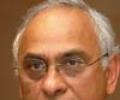
Rating agency Standard & Poor's is using the experience of working with the Indian rating agency, Crisil, a subsidiary of S&P, to its advantage. Deven Sharma, president, Standard & Poor's, spoke to Rajesh Bhayani

Many developers are facing financial challenges after the IL&FS defaults, after which non-banking finance companies - the major financiers to real estate firms - slowed disbursals.

Lower gold imports and higher overall exports to help narrow the gap.
The specific characteristics of the Indian growth slowdown are poised, according to some observers, to stall a major structural change to the Indian economy.

The stimulus package announced by Finance Minister Nirmala Sitharaman "fails to involve" banks in the economic revival process, a member of the Reserve Bank of India's central board said on Wednesday. The stimulus package is "imaginative and forward looking, yet fails to involve banks as frontline warriors in revival of economy," Satish Marathe, a member of RBI's central board, said in a social media post.
The deadline for the commercial launch of the Navi Mumbai airport is set at 2021-end
CRISIL predicts no more than 6.5 per cent yearly from now till FY19, and only with a stable and decisive government; predicts problems in job generation, poverty and demand.

India must be prepared for a big, fat fuel import bill in FY23 - barring any further avatars of the Covid virus - as refiners crank up runs, or crude processing rates, to meet the growing demand for fuels, and crude prices soar. Capacity additions by an Indian state-run refiner will reinforce the need for foreign crude. Demand for all fuels is expected to increase by 3-8 per cent next fiscal from 2021-22, reaching pre-pandemic levels, according to analysts and industry experts.

Ajit Mishra, vice president, Research, Religare Broking, answers your queries.

After the easing of lockdown in mid-May, auto companies were able to resume production in a phased manner, but the ramp-up was slow due to a broken supply chain, and lockdown-induced restrictions.

Unlike bank FDs that are considered risk-free investments, NCDs do carry a certain amount of risk, primary among them is the risk of default, either servicing the interest payment or meeting their principal repayment obligations.

'The levy proposed to be charged on air tickets for regional connectivity fund would marginally increase cost.'
Clearly, the domestic market has taken sharp knocks in April, which is likely to be visible in May as well, said analysts tracking the market, as FMCG companies are grappling with improving capacity utilisation and dealing with labour shortage.
